Storm Damage Roof Repair in NJ: What to Do Immediately After Severe Weather
When a severe storm rolls through New Jersey, your roof takes the hit first. Storm damage roof repair is one of the most time-sensitive things a homeowner can deal with. Every hour you wait, water finds a new path in. Shingles buckle, wood decking softens, and what started as a small problem turns into a costly one. If your home just went through a major storm, this guide is for you.
Who Needs to Read This
This post is for NJ homeowners who just experienced a storm and are not sure what to do next. Maybe you heard something hit your roof. Maybe you noticed a wet ceiling. Maybe your neighbor's tree is now touching your shingles.
Whatever the situation, acting fast matters. And knowing what steps to take can save you thousands.
What Storm Damage Actually Looks Like on a Roof
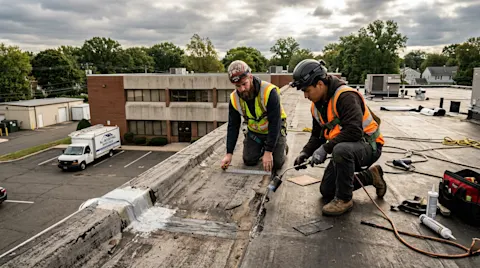
After severe weather, damage is not always obvious from the ground. Hail damage roof repair calls often come in days after a storm because homeowners did not notice the signs right away. Wind damage roof repair is similar. You might see a few missing shingles and assume it is minor, when underneath, the decking is already wet.
Common signs of storm damage include:
- Missing, cracked, or curled shingles
- Dents or bruising on shingles from hail impact
- Granule loss visible in gutters or downspouts
- Damaged or bent flashing around chimneys and vents
- Water stains on interior ceilings or walls
- Sagging areas on the roof deck
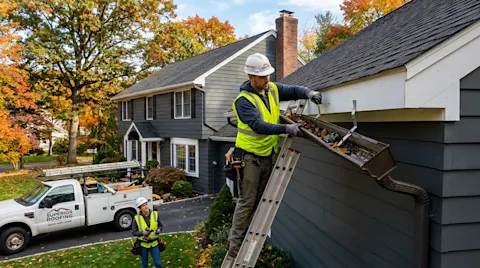
- Debris sitting on the roof or in the gutters
If you see any of these, do not wait for the next rain to confirm there is a problem. By then, the damage is already spreading inside your home.
Why Acting Fast on Storm Damage Roof Repair Matters
Water is patient. It will find every gap, every crack, every lifted shingle edge. Once it gets into your roof system, it moves fast. Insulation gets soaked. Mold begins forming within 24 to 48 hours. Wood rot follows.
A leaking roof repair that costs a few hundred dollars today can turn into a full deck replacement costing several thousand if you let it sit. Insurance companies also tend to be more cooperative when damage is documented quickly after a storm event.
The longer you wait, the harder it becomes to prove what was storm-related and what was pre-existing neglect. That distinction matters a lot when a claim is on the line.
What Happens When You Ignore It
Ignoring storm damage does not make it go away. Here is what typically happens in the weeks after an untreated roof breach:
- Water infiltration spreads along roof decking
- Attic insulation becomes saturated and loses effectiveness
- Mold and mildew growth begins in hidden spaces
- Interior drywall and ceilings start showing stains and bubbling paint
- Structural wood members begin to rot
- Your next storm causes exponentially more damage through the same entry point
What starts as a few missing shingles becomes a project that touches your attic, your walls, and potentially your electrical system. That is a much harder and more expensive situation to recover from.
Common Mistakes Homeowners Make After a Storm
A few approaches tend to make things worse, not better.
Waiting for the insurance adjuster before doing anything: You can still take protective steps, like covering exposed areas, before the adjuster visits. Document everything with photos first, then act.
Using a handyman instead of a licensed roofer: Roof systems are more complex than they look. A patch job done wrong can trap moisture and cause more damage than the original breach.
Ignoring small leaks: There is no such thing as a slow leak that stays slow. Water always finds more path over time.
Calling a storm chaser company: After major NJ storms, out-of-state roofing crews flood the area. They often use subpar materials, carry no local license, and disappear when problems arise. Always verify licensing and local presence before signing anything.
The Right Steps for Emergency Roof Repair in NJ
Here is a practical sequence to follow immediately after storm damage:
- Step 1: Stay safe. Do not climb on the roof yourself, especially while it is wet or while the storm is still active.
- Step 2: Document everything. Walk around the exterior and take photos and video of all visible damage. Check the attic for signs of water entry.
- Step 3: Contact your insurance company to open a claim and note the date and time of the storm event.
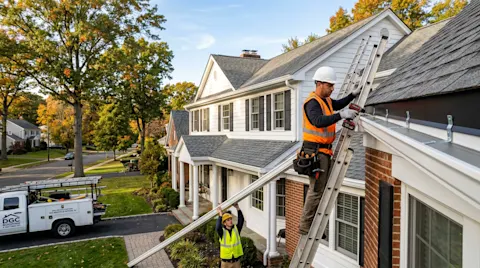
- Step 4: Call a licensed local roofer for an emergency roof repair NJ inspection as soon as possible. Same day roof repair may be available depending on severity.
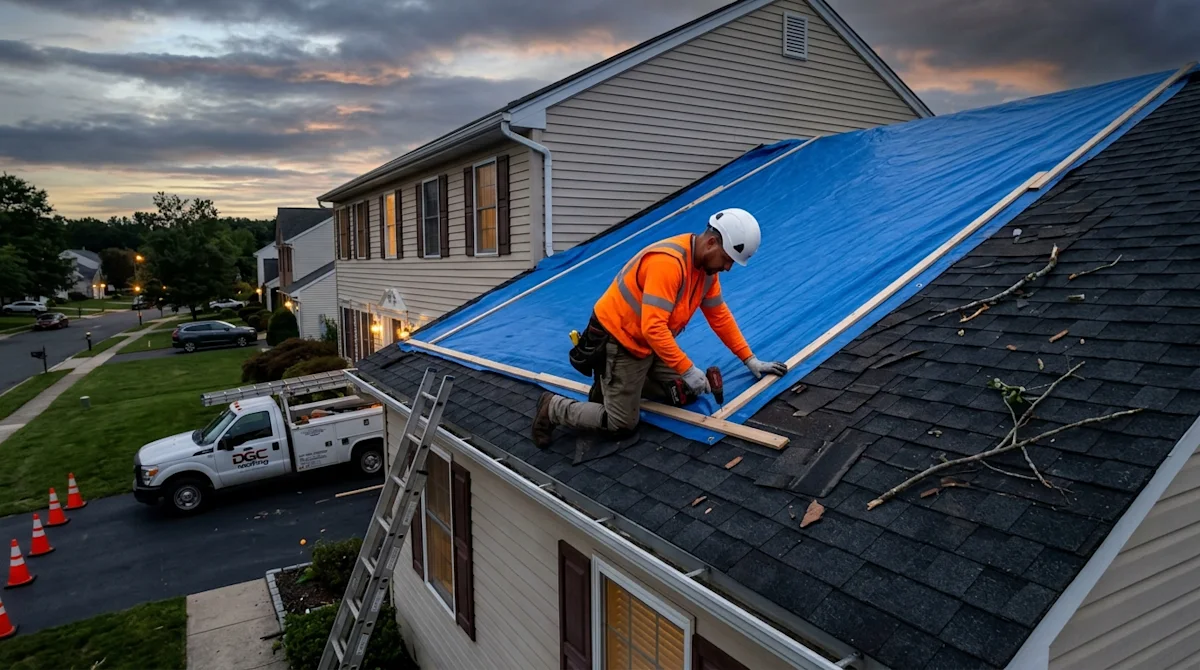
- Step 5: Ask your roofer about temporary tarping or emergency patching to stop active water intrusion while a full repair is scheduled.
- Step 6: Keep all receipts and records for your insurance claim file.
Speed and documentation are the two most important things you can do in the first 24 hours.
What to Look for in a Storm Damage Roofer
Not all roofing companies are the same, especially when you are dealing with emergency roof leak repair under pressure. Look for:
- Full NJ licensing and insurance, verified
- A local physical address, not just a phone number
- Experience with both hail damage roof repair and wind damage roof repair
- Willingness to provide a written estimate before work begins
- Familiarity with the insurance claims process
- A workmanship warranty on completed repairs
Roof repair NJ homeowners can trust comes down to transparency, credentials, and accountability. If a company pressures you to sign before you can read the contract, walk away.
How DGC Roofing Handles Storm Damage in New Jersey
DGC Roofing has been serving NJ homeowners for over 10 years. We are fully licensed and insured, and we offer emergency response for storm-damaged roofs across Middlesex, Monmouth, Somerset, Mercer, Union, Bergen, and Hunterdon counties.
Our crew uses GAF Timberline shingles and quality materials on every job. We carry a 5-year workmanship warranty on all installations. When you call us after a storm, we show up, assess the damage honestly, and give you a clear written estimate before we touch anything.
We also help homeowners navigate the insurance documentation process. You should not have to figure that out alone while dealing with a damaged home.
You can see examples of our work in our media gallery, learn more about our full roofing services in New Jersey, or explore everything we offer on our services page.
Quick Checklist: After a Storm Hits Your Roof
- Do not go on the roof yourself
- Photograph all exterior and interior damage immediately
- Check attic for active drips or wet insulation
- Open an insurance claim right away
- Call a licensed local roofer for same day roof repair or emergency tarping
- Get a written estimate before agreeing to any work
- Ask about roof leak repair NJ warranty coverage on completed repairs
- Keep all documentation organized for the insurance adjuster
Storm Damage Roof Repair: Do Not Wait Until the Next Rain
Storm damage roof repair in NJ is not something to put off until next weekend. Every day without a fix is another opportunity for water to get deeper into your home. The good news is that fast action, the right roofer, and proper documentation can keep a bad situation from becoming a catastrophic one. If your roof took a hit, call a licensed local contractor today and get eyes on it before conditions get worse.
Ready to protect your home with New Jersey's most trusted roofing team? Request a free estimate from DGC Roofing and find out why homeowners across NJ count on us.